
Sustainable tropical hardwood
Sustainable forest management
At Denderwood, sustainability is at the heart of our ethos. We believe in the importance of responsible forest management and have fully committed our company to supporting sustainable practices in the timber industry. At Denderwood, we only import timber from sustainably managed concessions. In doing so, we as a company seek to leave a positive impact on the environment and help secure the future of our forests.
Working with partners who manage their concessions in a sustainable manner is a commitment deeply rooted in our corporate culture. By ensuring that the forests from which we import timber are managed responsibly, we contribute to the conservation of biodiversity, reduce deforestation and promote the restoration of ecosystems in our natural environment.
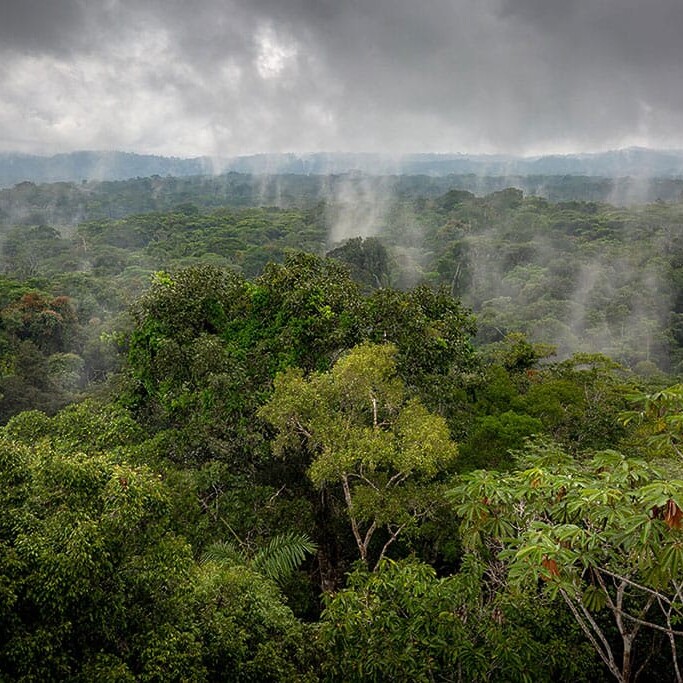
Our efforts extend beyond environmental responsibility. At Denderwood, we understand that sustainability also means that local communities benefit from our activities. We aim to work with our partners and the people living near these concessions, supporting them and ensuring they reap the benefits of sustainable forest management.
When you choose Denderwood, you are not only choosing high-quality timber, but also a conscious and responsible approach to the environment. We believe that every piece of wood tells a story, and we are proud that our story is one of commitment to sustainability and preserving our forests for future generations.
Biodiversity as a crucial role
Biodiversity plays a crucial role in the timber sector and has several important benefits. First, a diverse ecosystem contributes to the resilience and stability of our forests. This not only reduces susceptibility to diseases and pests, but also ensures a more sustainable timber supply in the long term. Preserving diversity also means exploiting forest diversity!
Wood as a renewable raw material
At Denderwood, we believe in the power of wood as a renewable resource and one of the most sustainable building materials available. Our commitment to sustainability is reflected in the belief that wood, if managed responsibly, is not only an environmentally responsible choice, but also a vital contribution to a sustainable future.
Wood is inherently renewable because it comes from trees, which convert carbon dioxide into oxygen through photosynthesis. Compared to non-renewable building materials, such as concrete and steel, the use of wood therefore helps reduce the carbon footprint. In addition, trees grow continuously and, if managed sustainably, can be harvested repeatedly without depleting our natural resources.
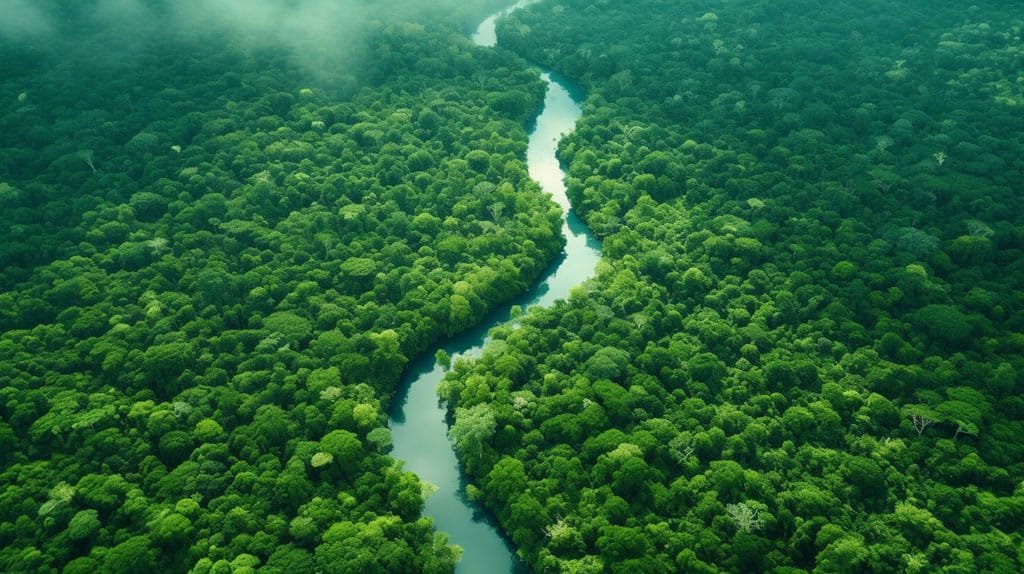
Trees absorb significant amounts of carbon dioxide during their growth process, so wood as a building material has a positive impact on the atmosphere. Moreover, wood production requires less energy compared to traditional building materials, reducing greenhouse gas emissions.
By consciously choosing wood as a building material, you contribute to preserving forests, reducing your carbon footprint and promoting a healthier planet for future generations.
Calculate for yourself how much CO2 is sequestered in your wood products and your impact on the environment:
Wood breathes
Wood, as a natural raw material, exhibits a unique property: it “breathes”. This property means that wood is able to absorb and release water vapour, allowing it to adapt to the ambient humidity. This ability to regulate moisture makes wood ideal for use in building materials, as it helps create a healthy and comfortable indoor environment.
Equally remarkable is the negative CO2 impact that wood can have. During the growth process, trees absorb carbon dioxide (CO2) from the atmosphere and convert it into oxygen, a fundamental part of photosynthesis. When wood is harvested and processed into building materials, the carbon stored in the wood is retained throughout the life of the material.
In fact, wood acts as a ‘carbon store’, retaining the absorbed CO2 and not releasing it until the wood is burned or decays. This makes wood an effective means of reducing its carbon footprint, as it limits the release of CO2 into the atmosphere.
So, unlike some non-renewable building materials, using wood helps reduce greenhouse gas emissions and promotes a sustainable approach for our construction industry.
At Denderwood, we recognise wood’s unique properties as a living, breathing resource and a powerful means of storing CO2. By choosing tropical hardwood as a building material, you are not only embracing a sustainable, quality and natural option, but also actively contributing to reducing the impact on our climate. Calculate for yourself how much CO2 is sequestered in your timber products and your impact on the environment.
Our certificates & labels
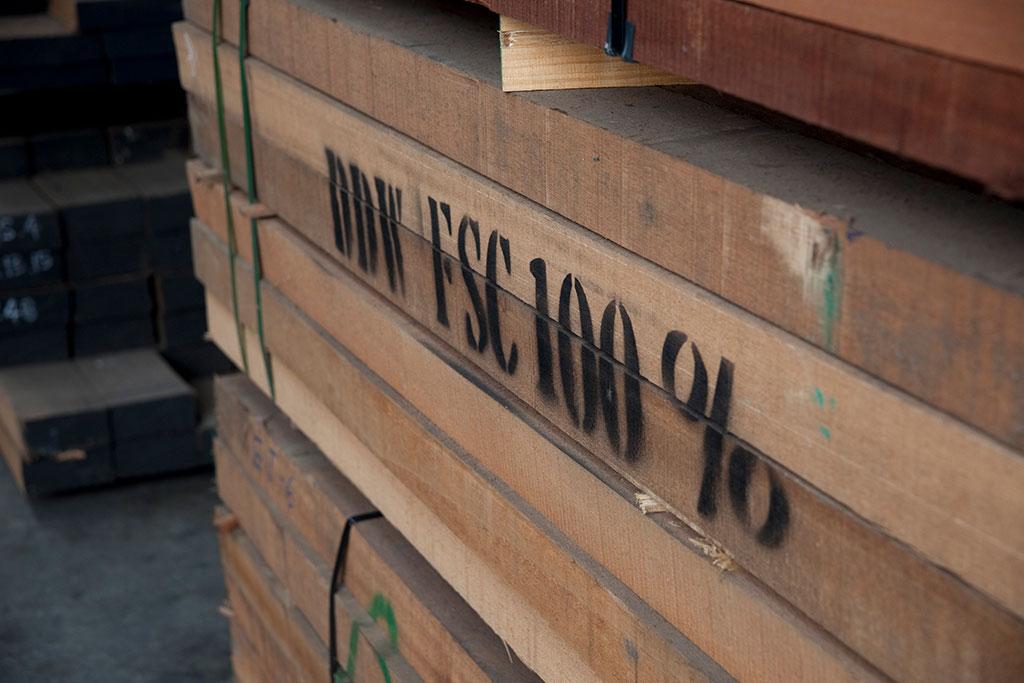
FSC 100%
FSC 100% indicates that wood comes entirely from responsibly managed forests. Fragile forests and forests of high natural value may not be used for timber production. Felling must not lead to the disappearance of forests or loss of biodiversity or affect the natural recovery capacity of the forest. This means that after felling trees, the forest must be given the chance to recover and no more wood may be felled than can grow. There are also social requirements in line with ILO guidelines. For instance, there must be no child or forced labour or discrimination. Furthermore, there must be trade union freedom, and safe and healthy working conditions. The rights and welfare of local communities must also be taken into account.
PEFC
PEFC has established the “Sustainability Benchmark” for sustainable forest management based on international principles. These requirements were not drawn up by PEFC itself, but were compiled from 250 requirements after international consultation with many different parties. These internationally drafted criteria are endorsed by 149 countries. PEFC tests whether national standards for sustainable forest management meet this benchmark. The assessment is a comprehensive process. National certification systems that are approved are covered by the PEFC label. The PEFC guarantees that wood and paper products come from a sustainably managed forest. Currently, 36 countries are members of PEFC and more than 30 of these countries have an approved standard for sustainable forest management. Every five years, the national standards are reviewed and re-evaluated. Thus, the forest standards are continuously improved, in this PEFC is unique. The Sustainability Benchmark itself is also reviewed regularly.